Beating our black children furthers the legacy of slavery
Share
Explore Our Galleries









Breaking News!
Today's news and culture by Black and other reporters in the Black and mainstream media.
Ways to Support ABHM?
By David A. Love, theGrio.com
If it can be said that real men don’t hit women, then we should also say real men don’t beat children.
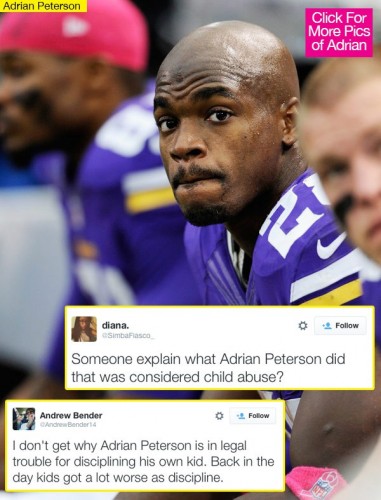
Minnesota Vikings running back Adrian Peterson was indicted on a felony charge for beating his four-year-old son with a switch — a tree branch — in an act that exceeded “reasonable discipline” according to the Montgomery County, Texas, District Attorney’s office. The NFL player punished his son for pushing another one of his children off of a motorbike video game, and Peterson said the whooping was not unlike the discipline “he experienced as a child growing up in east Texas.”
The boy reportedly suffered from numerous injuries, including cuts and wounds to his ankles, legs, hands, back, buttocks and scrotum. The child also said his father hit him with belts and put leaves in his mouth while he was being hit, pants down, with the switch.
As a black father with a four-year old son, I cannot imagine ever beating my beautiful child. I cannot and will not treat my son like a slave….
We all cringe with horror, perhaps even cry, when we view depictions of brutality in films such as 12 Years a Slave. It feels far too familiar, too close to home. If we recoil at the sight of slaves being beaten, then why would we subject our own children to the same treatment? The purpose of whippings, floggings and other forms of abuse under slavery was clear — to subjugate and control black people with arbitrary cruelty, beat them down not just physically but also spiritually and psychically, and reinforce the master’s control over them.
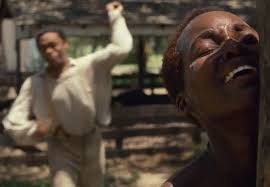
In some cases, enslaved black parents — who really had no rights over their own children, and perhaps had to care for the master’s children at the expense of their own — beat their children to please their owner, or to ward off more severe punishment from the master.
So how can this in any way benefit our children today?…
Many parents physically discipline their children, and black folks are no exception. And corporal punishment is not illegal in most states unless it causes severe harm. But just because something is legal does not mean it is right. And if you wonder how far you can go and steer clear of child protective services before crossing the line into criminal child abuse, then you have missed the point….

But in the end, if a criminal prosecution, league sanctions and maybe even an ousted commissioner are the only takeaways from this high profile case of child abuse, then there is a missed opportunity for society, and for black America, to deal with a serious problem. We must break the cycle of trauma that passes from generation to generation like the DNA and heal both the victim and the victimizer. We must challenge societal norms concerning definitions of manhood, and black manhood, and the notion that one must use physical violence against others as a means of controlling them.
[…]
In the meantime, it is time to give the switch a final resting place. Let’s not go there anymore.
To read David Love’s full opinion piece, click here.
Check out more opinions on this subject from African American thinkers and fathers, .Michael Eric Dyson, PhD and Charles Blow.
For other Breaking News, click here.
Comments Are Welcome
Note: We moderate submissions in order to create a space for meaningful dialogue, a space where museum visitors – adults and youth –– can exchange informed, thoughtful, and relevant comments that add value to our exhibits.
Racial slurs, personal attacks, obscenity, profanity, and SHOUTING do not meet the above standard. Such comments are posted in the exhibit Hateful Speech. Commercial promotions, impersonations, and incoherent comments likewise fail to meet our goals, so will not be posted. Submissions longer than 120 words will be shortened.
See our full Comments Policy here.