Caring for the Ancestors’ Land
Share
Explore Our Galleries

Breaking News!
Today's news and culture by Black and other reporters in the Black and mainstream media.
Ways to Support ABHM?
By Levi Perrin, Word in Black
1 in 5 Black folks are food insecure. Artist and activist Bevelyn Afor Ukah is on a mission to do something about it.
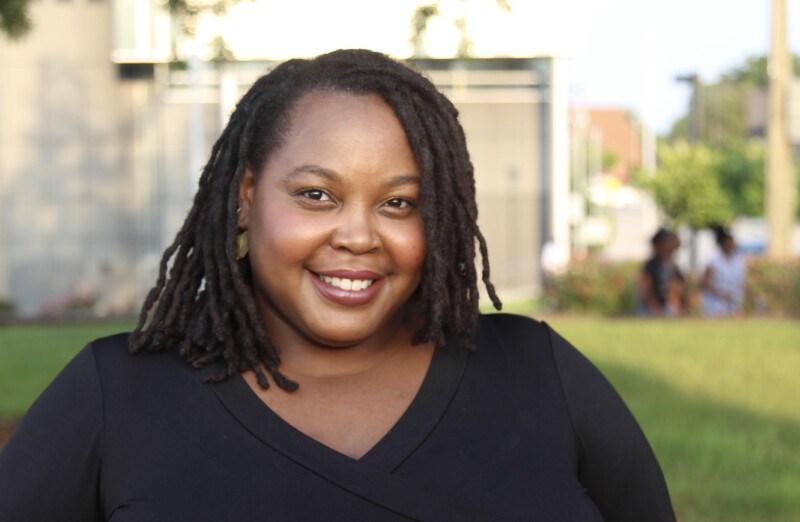
Bevelyn Afor Ukah is coming home to herself.
A space on a quiet street, surrounded by trees and greenery — where storytelling, community, and the earth come together to build a new future. With the ancestors and garden shears as her tools, Bevelyn’s resolve to use her hands to create a better world is unshakeable.
“At the end of the day, our future is a collective vision. There are millions of ways people can come together,” she said.
By day, the North Carolina-based activist serves on the Committee on Racial Equity in the Food System (CORE) and as director for the Center for Environmental Farming Systems (CEFS). By night, she is an artist steeped in Afrofuturism and a convener of Black people on organizing, empathy, and looking toward what is to come.
Ukah is a product of multi-general food deprivation. Scarcity of access to nutritious food hits hard in Black communities. In 2022, one in five Black people in the United States reportedly experienced food insecurity, and almost nine million could not access enough food to lead a healthy lifestyle.
That disparity is at the heart of Ukah’s work with CORE and CEFS.
Learn more about our African ancestors in this virtual exhibit gallery.
Find more Breaking News here.
Comments Are Welcome
Note: We moderate submissions in order to create a space for meaningful dialogue, a space where museum visitors – adults and youth –– can exchange informed, thoughtful, and relevant comments that add value to our exhibits.
Racial slurs, personal attacks, obscenity, profanity, and SHOUTING do not meet the above standard. Such comments are posted in the exhibit Hateful Speech. Commercial promotions, impersonations, and incoherent comments likewise fail to meet our goals, so will not be posted. Submissions longer than 120 words will be shortened.
See our full Comments Policy here.