‘I see the apathy’: Saginaw city’s Black voters could be vital – if they vote
Share
Explore Our Galleries









Breaking News!
Today's news and culture by Black and other reporters in the Black and mainstream media.
Ways to Support ABHM?
By Chris McGreal, The Guardian
A majority of Black residents of key Michigan city don’t cast a ballot, but activists and churches are trying to change that
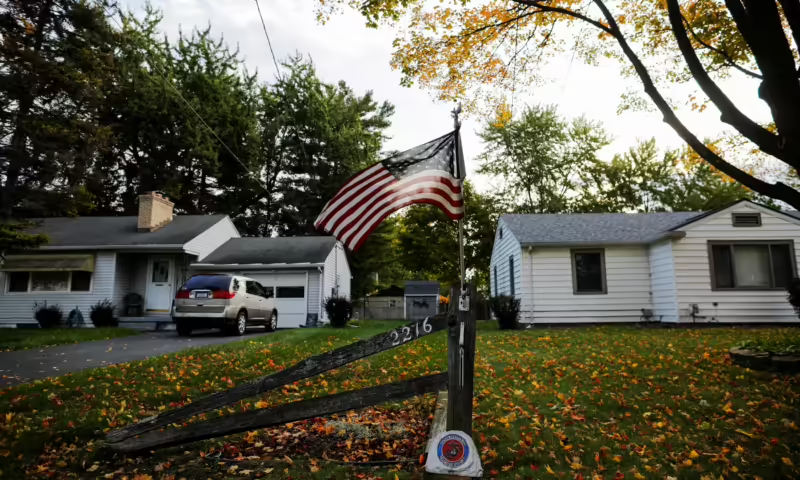
The largest bloc of registered voters in the city of Saginaw has yet to make a choice between Donald Trump and Kamala Harris, and probably never will. A majority of Black residents of the biggest city in the most closely contested county of the battleground state of Michigan simply don’t vote.
To the frustration of civil rights activists and Democratic politicians struggling to secure every ballot in a state that the Harris campaign sees as crucial to victory, more than half of Saginaw city’s population has long been unpersuaded that elections make much of a difference to their lives.
Now, against the backdrop of the drama of the US’s knife-edge 2024 election, Black organizations and churches are once again making a determined push to turn out voters, helped by the first female Black candidate for president and changes to Michigan law making it easier to vote.
But Terry Pruitt, president of the local National Association for the Advancement of Colored People (NAACP) branch running voter education campaigns, said it was a struggle to generate enthusiasm in Saginaw.
“I’ve been here all my life. I grew up on the east side of Saginaw and I see the apathy. This is not something that they put at the top of the priority list when they’ve got to figure out, can I get to work today?” he said.
“My church is on the south side of Saginaw, probably the lowest socioeconomic district in Saginaw county other than a couple of rural areas, and when I walk through the neighborhood and talk to people about why they don’t vote, you’d be surprised how many of them say, ‘that’s not important to me.’ These folks are going to go ahead and do what they want to do. They don’t listen to me. They don’t want to hear what I have to say.”
Continue reading from Saginaw on the 2024 election.
Explore the history of Reconstruction and outset of Black voting rights.
More Breaking News here.
Comments Are Welcome
Note: We moderate submissions in order to create a space for meaningful dialogue, a space where museum visitors – adults and youth –– can exchange informed, thoughtful, and relevant comments that add value to our exhibits.
Racial slurs, personal attacks, obscenity, profanity, and SHOUTING do not meet the above standard. Such comments are posted in the exhibit Hateful Speech. Commercial promotions, impersonations, and incoherent comments likewise fail to meet our goals, so will not be posted. Submissions longer than 120 words will be shortened.
See our full Comments Policy here.