Reimagining the police
Share
Explore Our Galleries









Breaking News!
Today's news and culture by Black and other reporters in the Black and mainstream media.
Ways to Support ABHM?
By Spencer Piston, Boston Globe
Alternatives to public safety are gaining momentum, but activists worry many of these ‘alternatives’ still involve police and don’t address root causes.
Too often, when people call the police seeking help, they get responses that compound rather than address a harm. What if they could be provided with other options? In addition to meeting people’s immediate needs, what if jurisdictions could address the root causes of problems citizens face?
One night in July 2020, Jacqueline Kung heard someone crying outside of her Cambridge, Massachusetts, apartment. She stepped outside to see what was happening and saw five police officers surrounding a handcuffed young Black man.
“I thought something’s really wrong here because it’s not like there’s some kind of obvious crime going on and he’s crying,” says Kung, 42, an endocrinologist. “And why are there so many police?”
Kung knew what to do. She whipped out her cell phone and started recording. She wasn’t the only one: About 20 to 30 people from her building captured video as well, including children and her husband.
It turns out the young man’s mother had just died inside their home. The look on his face and his body language reminded Kung of times when her patients died from COVID-19, and how their families keened in anguish: “The family can be distraught, hysterical; that’s understandable,” she says. “Sometimes they react in ways where they’re yelling, or they’re trying to get into the patient’s room, even though we don’t think that’s a good idea.”
A police officer approached Kung, declaring, “There’s nothing going on,” and telling her she didn’t need to record anything because the young man was “having a mental health crisis.” Kung identified herself as a physician who could help, but the officer said, “No,” and again told her to stop recording.
“I’m not recording him. I’m recording you,” she told the cop.
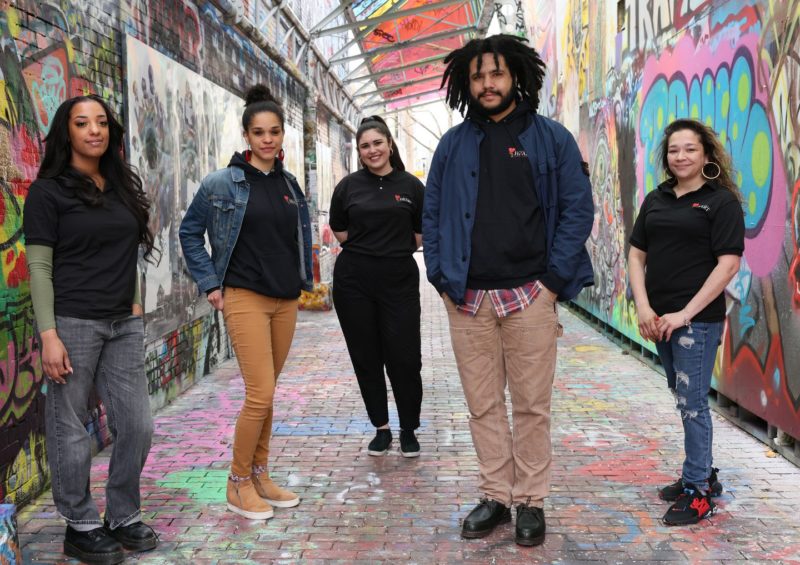
The officer’s response, and the fact that law enforcement canceled ambulance calls to the scene that night, left a bad taste, says Kung, who filed a complaint with the police department. She later channeled her angst into working with a policing alternative called Cambridge HEART (Holistic Emergency Alternative Response Team), a community-led, proactive public safety program that aims to address the immediate needs of people in conflict or crisis.
Kung believes mutual aid organizations like HEART could be a way to make sure people get medical care or social services without police getting in the way or harming them further.
The original article delves into alternatives to police intervention.
Too often, police involvement leads to loss of life or imprisonment, which disproportionately impacts Black Americans and encourages the BLM movement.
Comments Are Welcome
Note: We moderate submissions in order to create a space for meaningful dialogue, a space where museum visitors – adults and youth –– can exchange informed, thoughtful, and relevant comments that add value to our exhibits.
Racial slurs, personal attacks, obscenity, profanity, and SHOUTING do not meet the above standard. Such comments are posted in the exhibit Hateful Speech. Commercial promotions, impersonations, and incoherent comments likewise fail to meet our goals, so will not be posted. Submissions longer than 120 words will be shortened.
See our full Comments Policy here.