Special News Series: Rising Up For Justice! – Opinion: I want to believe justice is possible in Derek Chauvin’s trial.
Share
Explore Our Galleries









Breaking News!
Today's news and culture by Black and other reporters in the Black and mainstream media.
Ways to Support ABHM?
Introduction To This Series:
This post is one installment in an ongoing news series: a “living history” of the current national and international uprising for justice.
Today’s movement descends directly from the many earlier civil rights struggles against repeated injustices and race-based violence, including the killing of unarmed Black people. The posts in this series serve as a timeline of the uprising that began on May 26, 2020, the day after a Minneapolis police officer killed an unarmed Black man, George Floyd, by kneeling on his neck. The viral video of Floyd’s torturous suffocation brought unprecedented national awareness to the ongoing demand to truly make Black Lives Matter in this country.
The posts in this series focus on stories of the particular killings that have spurred the current uprising and on the protests taking place around the USA and across the globe. Sadly, thousands of people have lost their lives to systemic racial, gender, sexuality, judicial, and economic injustice. The few whose names are listed here represent the countless others lost before and since. Likewise, we can report but a few of the countless demonstrations for justice now taking place in our major cities, small towns, and suburbs.
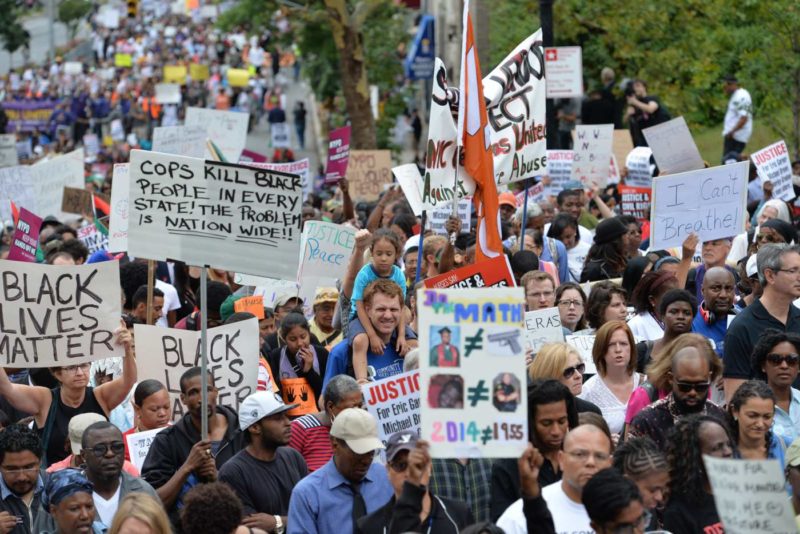
To view the entire series of Rising Up for Justice! posts, insert “rising up” in the search bar above.
Opinion: I want to believe justice is possible in Derek Chauvin’s trial. But a part of me holds back.
Opinion by Eugene Robinson, The Washington Post
April 12, 2021
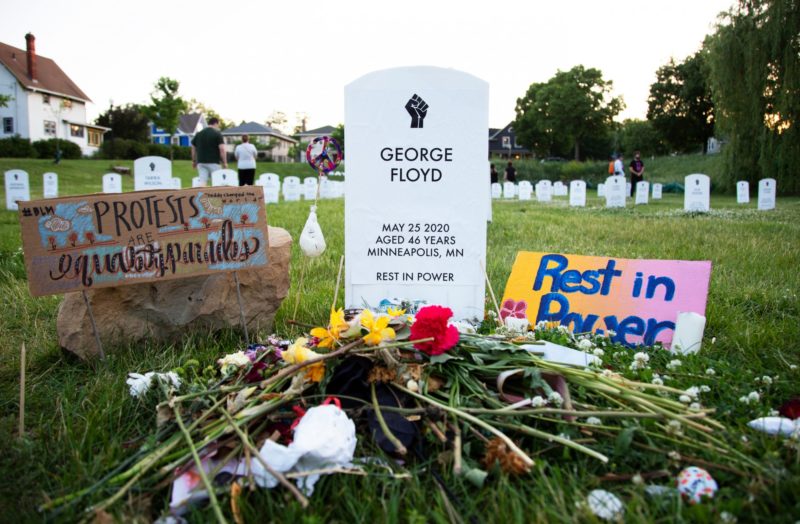
After hearing in such clinical, heartbreaking, infuriating detail about George Floyd’s final agonies, I want to believe justice is possible in the Derek Chauvin trial. I want to believe the jurors heard what I heard and felt what I feel. I want to allow myself to hope for it. But a part of me holds back.
The police officers who beat Rodney King to a pulp were acquitted. The self-appointed vigilante who shot Trayvon Martin to death was acquitted. The police officer who killed Philando Castile after a routine traffic stop — just miles from the Minneapolis intersection where Floyd died — was acquitted.
It feels risky to have any confidence that this time the outcome will be different, even though it feels as though it should be. It’s not just that the prosecutors seeking to convict Chauvin of murder have presented what seems to me an overwhelming case. This trial and the context in which it’s taking place are different from the other proceedings that led to such shattering disappointments.
Never that I can recall, in all the attempts to hold police accountable for unjustified killings of African Americans, have we heard such damning testimony from the highest levels of the police department in question. Minneapolis Police Chief Medaria Arradondo told the jury last week that Chauvin, once he had Floyd in the prone position, should have quickly released the pressure he was applying to Floyd’s neck and back — rather than kneeling on Floyd for more than nine minutes…
Some of the most excruciating testimony has come from medical experts who described, in agonizing detail, the nature of Floyd’s death. Martin Tobin, a Loyola University Medical Center pulmonologist and expert on the mechanics of breathing, had the jurors examine their own necks to identify the anatomical features he was describing: the hypopharynx toward the front, the nuchal ligament in the back.
For me, the most searing moments of the trial thus far came when Tobin used video footage to show how Floyd, his neck and chest compressed by Chauvin’s weight, struggled to breathe — how he desperately tried to use his right hand to push against the pavement or the officers’ squad car to create space for his lungs to expand. And then Tobin showed the moment when Floyd’s leg lifted in an involuntary spasm — an anoxic seizure — marking the lack of oxygen to the brain. Chauvin kept his knee on Floyd’s neck for at least two minutes after learning he had no pulse…
Floyd’s death is fully documented on video recorded from multiple angles: the onlookers’ cellphones, the officers’ body cameras, a surveillance camera across the street. All the jurors have to do is believe their own eyes and ears. I should be able to expect that they will do so. I should at least be able to hope they will.
But hope still feels dangerous…
I want to believe jurors will see Floyd simply, and fully, as a man. Too often, that has been too much to hope for.
Read the full article here.
More Breaking News here.
Explore the ABHM galleries here.
Comments Are Welcome
Note: We moderate submissions in order to create a space for meaningful dialogue, a space where museum visitors – adults and youth –– can exchange informed, thoughtful, and relevant comments that add value to our exhibits.
Racial slurs, personal attacks, obscenity, profanity, and SHOUTING do not meet the above standard. Such comments are posted in the exhibit Hateful Speech. Commercial promotions, impersonations, and incoherent comments likewise fail to meet our goals, so will not be posted. Submissions longer than 120 words will be shortened.
See our full Comments Policy here.