Special News Series: Rising Up For Justice! – Protesters gather to drown out Trump’s RNC speech
Share
Explore Our Galleries









Breaking News!
Today's news and culture by Black and other reporters in the Black and mainstream media.
Ways to Support ABHM?
Introduction To This Series:
This post is one installment in an ongoing news series: a “living history” of the current national and international uprising for justice.
Today’s movement descends directly from the many earlier civil rights struggles against repeated injustices and race-based violence, including the killing of unarmed Black people. The posts in this series serve as a timeline of the uprising that began on May 26, 2020, the day after a Minneapolis police officer killed an unarmed Black man, George Floyd, by kneeling on his neck. The viral video of Floyd’s torturous suffocation brought unprecedented national awareness to the ongoing demand to truly make Black Lives Matter in this country.
The posts in this series focus on stories of the particular killings that have spurred the current uprising and on the protests taking place around the USA and across the globe. Sadly, thousands of people have lost their lives to systemic racial, gender, sexuality, judicial, and economic injustice. The few whose names are listed here represent the countless others lost before and since. Likewise, we can report but a few of the countless demonstrations for justice now taking place in our major cities, small towns, and suburbs.
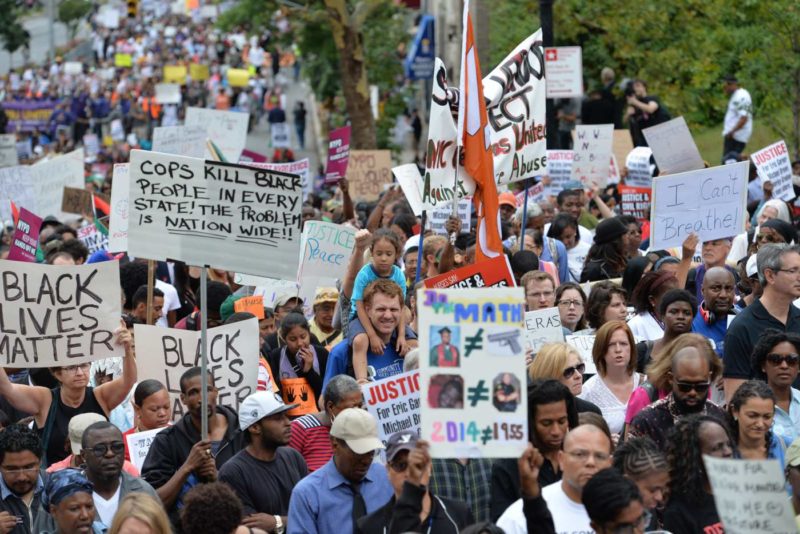
To view the entire series of Rising Up for Justice! posts, insert “rising up” in the search bar above.
Protesters gather in an attempt to drown out Trump’s RNC speech
By Ashraf Khalil, The Associated Press
August 27, 2020
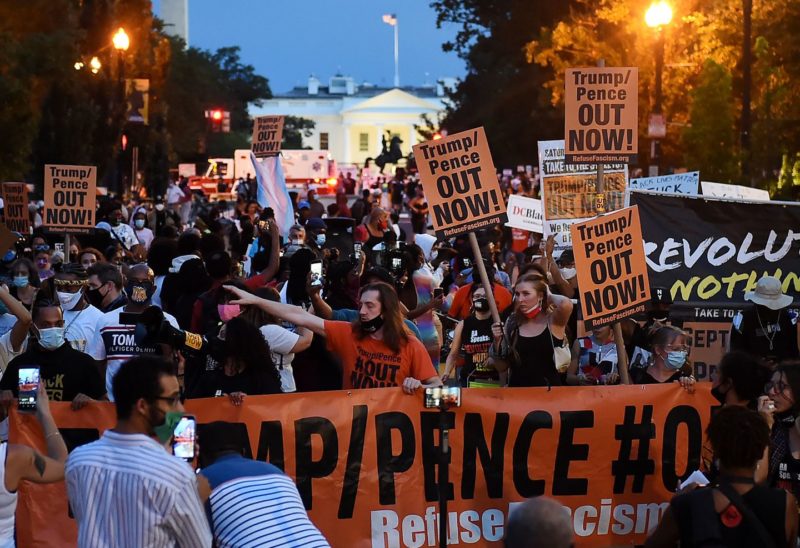
WASHINGTON (AP) — Hundreds of demonstrators gathered around the White House on Thursday night for what was billed as a “noise demonstration and dance party” to drown out President Donald Trump’s speech accepting the Republican presidential nomination.
“I hope you hear us, Trump,” the leader of the popular local band TOB shouted. The band blared Go-Go music, a distinctive D.C. variant on funk, as it headed toward the White House.
Trump was delivering his acceptance speech from the White House’s South Lawn to close out the Republican National Convention. One protester held up a sign, “Nightmare on Pennsylvania Avenue” — the street where the White House is located.
Acknowledging the coronavirus pandemic, the demonstrators wore masks but there was no social distancing.
“Make some noise if you want to drown out Trump,” protest organizer Justin Johnson said.
There was a robust police presence but the demonstration was peaceful. At one point, Johnson thanked the police for letting the band and protesters through a barricade. After a brief cheer from the crowd, he said, “That’s it. That’s all they get…”
During the protests Thursday night, there was a brief standoff between police and demonstrators, who shouted anti-police slogans. “Free the people, fight the power,” they chanted. Nearby protesters set up a small guillotine, with the District of Columbia flag as the blade.
Lafayette Park, a traditional site of demonstrations across from the White House, was sealed off and there were some street closures.
Read the full article here.
More Breaking News here.
Explore the ABHM galleries here.
Comments Are Welcome
Note: We moderate submissions in order to create a space for meaningful dialogue, a space where museum visitors – adults and youth –– can exchange informed, thoughtful, and relevant comments that add value to our exhibits.
Racial slurs, personal attacks, obscenity, profanity, and SHOUTING do not meet the above standard. Such comments are posted in the exhibit Hateful Speech. Commercial promotions, impersonations, and incoherent comments likewise fail to meet our goals, so will not be posted. Submissions longer than 120 words will be shortened.
See our full Comments Policy here.