Special News Series: Rising Up For Justice! – There are proven ways to keep protests peaceful. Trump is doing the opposite.
Share
Explore Our Galleries









Breaking News!
Today's news and culture by Black and other reporters in the Black and mainstream media.
Ways to Support ABHM?
Introduction To This Series:
This post is one installment in an ongoing news series: a “living history” of the current national and international uprising for justice.
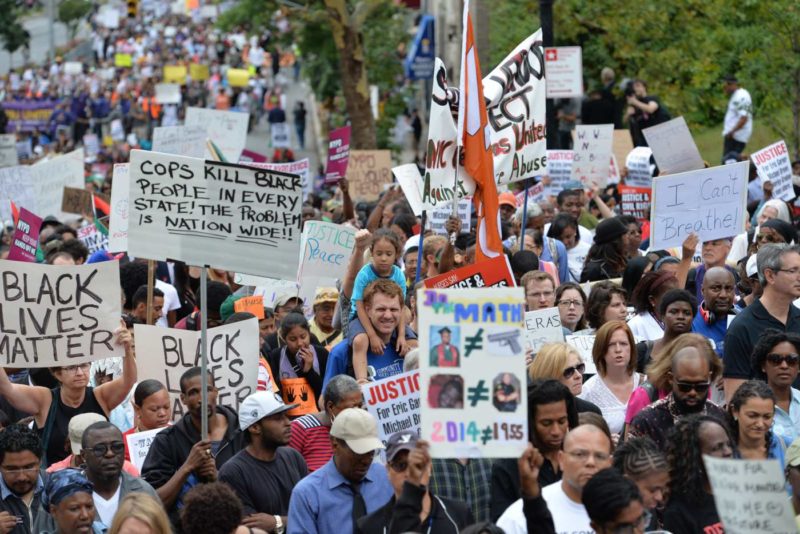
Today’s movement descends directly from the many earlier civil rights struggles against repeated injustices and race-based violence, including the killing of unarmed Black people. The posts in this series serve as a timeline of the uprising that began on May 26, 2020, the day after a Minneapolis police officer killed an unarmed Black man, George Floyd, by kneeling on his neck. The viral video of Floyd’s torturous suffocation brought unprecedented national awareness to the ongoing demand to truly make Black Lives Matter in this country.
The posts in this series focus on stories of the particular killings that have spurred the current uprising and on the protests taking place around the USA and across the globe. Sadly, thousands of people have lost their lives to systemic racial, gender, sexuality, judicial, and economic injustice. The few whose names are listed here represent the countless others lost before and since. Likewise, we can report but a few of the countless demonstrations for justice now taking place in our major cities, small towns, and suburbs.
To view the entire series of Rising Up for Justice! posts, insert “rising up” in the search bar above.
There are proven ways to keep protests peaceful. Trump is doing the opposite.
At the presidential debate, Trump continued to use rhetoric that will only make tensions worse.
By German Lopez, Vox
October 1, 2020
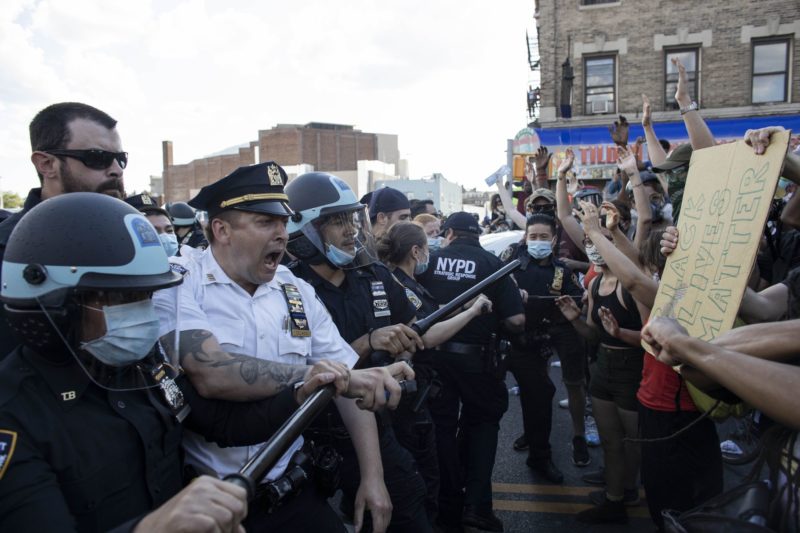
In the months of Black Lives Matter protests following the death of George Floyd in May, President Donald Trump has called on local and state officials to crack down as harshly as possible — a call he repeated at Tuesday’s presidential debate. But experts say that Trump’s rhetoric and actions risk inflaming tensions and escalating protests further, instead of keeping the peace.
Trump has characterized the protests as violent, even though more than 90 percent of thousands of protests nationwide have been peaceful. He’s dismissed protesters’ concerns, promising to “DEFEND OUR POLICE” rather than pursue policing reforms. He’s refused to criticize a vigilante shooter who killed two demonstrators and was charged with murder…
He again used this kind of rhetoric at Tuesday’s presidential debate: “If we would send in the National Guard, it would be over.” (Governors in states where riots broke out have, in fact, sent in the National Guard.)
Some Republican leaders are taking cues from Trump. Last month, for example, Florida Gov. Ron DeSantis proposed changes that would escalate penalties for riots, block state funding for cities that “defund the police,” and stiffen penalties for protesters who hit a police officer during a “disorderly assembly,” Politico reported.
But if the goal is ensuring that protesters can exercise their First Amendment rights while avoiding the outbreaks of violence seen in Portland; Kenosha, Wisconsin; and other cities in the US this past summer, the confrontational, dismissive approach that Trump and his allies are taking will very likely make things worse, experts say.
The point of protests is for people to feel heard. Demonstrators are marching in the streets because they want to say something, and they want others — the public, politicians, and so on — to see and hear those messages…
The goal of the government’s response to any protest should be to ensure that people feel heard and can express their opinions, while still protecting the broader public if things get out of control.
Read the full article here.
More Breaking News here.
Comments Are Welcome
Note: We moderate submissions in order to create a space for meaningful dialogue, a space where museum visitors – adults and youth –– can exchange informed, thoughtful, and relevant comments that add value to our exhibits.
Racial slurs, personal attacks, obscenity, profanity, and SHOUTING do not meet the above standard. Such comments are posted in the exhibit Hateful Speech. Commercial promotions, impersonations, and incoherent comments likewise fail to meet our goals, so will not be posted. Submissions longer than 120 words will be shortened.
See our full Comments Policy here.