Taraji P. Henson Almost Walked Away From ‘The Color Purple’ Due to Pay Disparity
Share
Explore Our Galleries
Breaking News!
Today's news and culture by Black and other reporters in the Black and mainstream media.
Ways to Support ABHM?
Kaitlin Simpson, Us Weekly
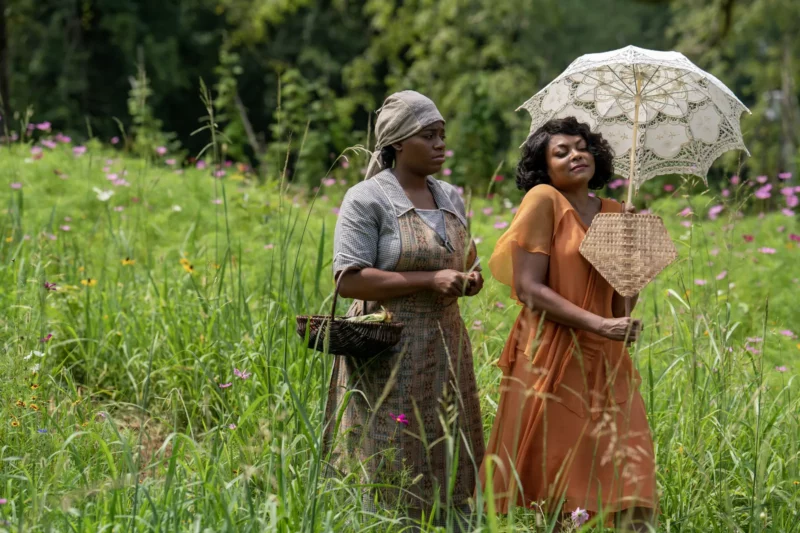
Taraji P. Henson admitted that she almost didn’t accept her role in The Color Purple due to a pay disparity.
“I almost had to walk away from The Color Purple,” Henson, 53, said in a Tuesday, December 19, live interview for the SAG-AFTRA Foundation, which earned gasps from the audience. “Yes, ma’am. … If I don’t take a stand, how am I making it easy for Fantasia [Barrino] and Danielle [Brooks] and Halle [Bailey] and Phylicia [Pearl Mpasi]? Why am I doing this, if it’s all just for me?”
While Henson didn’t share details about the discrepancy in her offer, she noted that she hadn’t received a “raise” since she starred in the 2018 film Proud Mary.
“I’m getting really tired of Black women having the same story, it’s breaking my heart,” she admitted. “It’s like every time you achieve something really incredible, it’s almost like the industry looks at it like a fluke.”
Read more about Henson’s struggles in the original article.
Learn about people who were some of the first to fight to end discrimination in the workforce in this virtual exhibit.
Find more Breaking News here.
Comments Are Welcome
Note: We moderate submissions in order to create a space for meaningful dialogue, a space where museum visitors – adults and youth –– can exchange informed, thoughtful, and relevant comments that add value to our exhibits.
Racial slurs, personal attacks, obscenity, profanity, and SHOUTING do not meet the above standard. Such comments are posted in the exhibit Hateful Speech. Commercial promotions, impersonations, and incoherent comments likewise fail to meet our goals, so will not be posted. Submissions longer than 120 words will be shortened.
See our full Comments Policy here.