Third set of remains found with gunshot wound in search for 1921 Tulsa Race Massacre graves, state official says
Share
Explore Our Galleries









Breaking News!
Today's news and culture by Black and other reporters in the Black and mainstream media.
Ways to Support ABHM?
From CBS
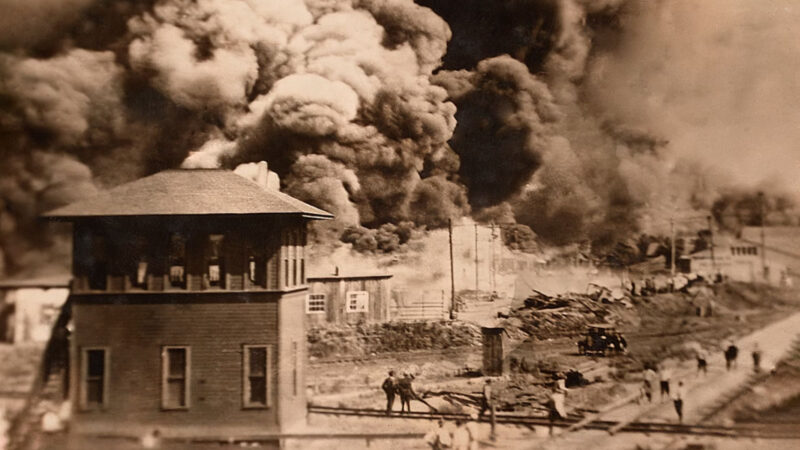
A third set of remains with a gunshot wound has been found at Tulsa cemetery in the search for graves of victims of the 1921 Tulsa Race Massacre, according to a state official.
The remains are one of three sets exhumed so far during the latest search and were found in an area where 18 Black men killed in the massacre are believed to have been buried, Oklahoma State archaeologist Kary Stackelbeck said in a statement on social media Friday.
“We have exhumed him, he is in the forensic lab and undergoing analysis,” on-site at Tulsa’s Oaklawn Cemetery, Stackelbeck said.
[…]
The remains exhumed during the current search are among 40 graves found, Stackelbeck said, and meet the criteria for how massacre victims were buried, based on newspaper articles at the time, death certificates and funeral home records.
“Those three individuals are buried in adult-sized, wooden caskets so they have been removed from the ground and taken to our forensic facility on site,” Stackelbeck said.
The discovery comes nearly a month after the first identification of remains previously exhumed during the search for massacre victims were identified as World War I veteran C.L. Daniel from Georgia.
Until several years ago, many were unaware of this part of Black history.
Stop by ABHM’s breaking news page.
Comments Are Welcome
Note: We moderate submissions in order to create a space for meaningful dialogue, a space where museum visitors – adults and youth –– can exchange informed, thoughtful, and relevant comments that add value to our exhibits.
Racial slurs, personal attacks, obscenity, profanity, and SHOUTING do not meet the above standard. Such comments are posted in the exhibit Hateful Speech. Commercial promotions, impersonations, and incoherent comments likewise fail to meet our goals, so will not be posted. Submissions longer than 120 words will be shortened.
See our full Comments Policy here.