This Day in History: Samuel L. Jackson, Actor, and Producer born
Share
Explore Our Galleries









Breaking News!
Today's news and culture by Black and other reporters in the Black and mainstream media.
Ways to Support ABHM?
From the African American Registry
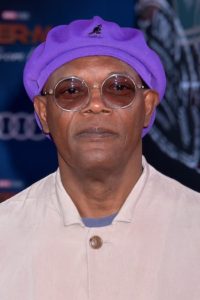
Samuel Leroy Jackson was born in Washington, D.C., the son of Elizabeth Harriett Montgomery and Roy Henry Jackson, in 1948. He grew up as an only child in Chattanooga, Tennessee. His father lived away from the family in Kansas City, Missouri, and later died from alcoholism. Jackson met his father only twice during his life. His mother, a factory worker, raised Jackson and later a supplies buyer for a mental institution, and his maternal grandparents, Edgar and Pearl Montgomery, and extended family.
Jackson attended several segregated schools and graduated from Riverside High School in Chattanooga. Between the third and 12th grades, he played the French horn and trumpet in the school orchestra. Jackson also played the flute and piccolo. Initially intent on pursuing a degree in marine biology, he attended Morehouse College. After joining a local acting group to earn extra points in a class, Jackson became interested in acting and switched his major; he co-founded the “Just Us Theatre.”
In 1968, Jackson attended the funeral of Martin Luther King, Jr. in Atlanta as one of the ushers. Jackson then flew to Memphis to join an equal rights protest march. In a Parade interview, Jackson revealed: “I was angry about the assassination, but I wasn’t shocked by it. I knew that change would take something different, not sit-ins, not peaceful coexistence.” In 1969, Jackson and several other students held members of the Morehouse College board of trustees hostage on the campus, demanding reform in the school’s curriculum and governance. The college eventually agreed to change its policy. Still, he was charged with and convicted of unlawful confinement, a second-degree felony, and then suspended for two years for his criminal record and his actions.
While suspended, Jackson was employed as a social worker in Los Angeles. Jackson returned to Atlanta and met with Stokely Carmichael, H. Rap Brown, and others active in the Black Power movement. However, his mother sent him back to Los Angeles after the FBI told her he would die within a year if he remained with the Black Power movement. He would return to college to earn his Bachelor of Arts in Drama in 1972. In 1980, Jackson married actress and sports producer LaTanya Richardson.
Learn more about Jackson’s life.
The actor has traced his roots back to Africa.
Comments Are Welcome
Note: We moderate submissions in order to create a space for meaningful dialogue, a space where museum visitors – adults and youth –– can exchange informed, thoughtful, and relevant comments that add value to our exhibits.
Racial slurs, personal attacks, obscenity, profanity, and SHOUTING do not meet the above standard. Such comments are posted in the exhibit Hateful Speech. Commercial promotions, impersonations, and incoherent comments likewise fail to meet our goals, so will not be posted. Submissions longer than 120 words will be shortened.
See our full Comments Policy here.