‘Uncovering Black History’: First black hospital, hotel in Bainbridge still stands
Share
Explore Our Galleries









Breaking News!
Today's news and culture by Black and other reporters in the Black and mainstream media.
Ways to Support ABHM?
By Lenah Allen, WALB
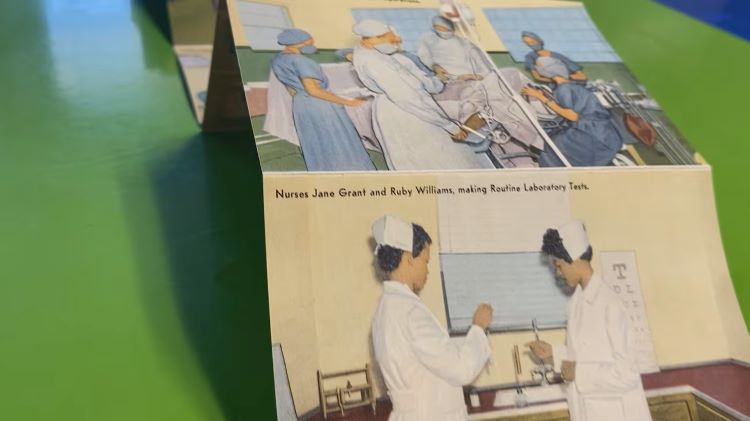
BAINBRIDGE, Ga. (WALB) – Some buildings serve as a reminder of the past, and of Black History. One such building in Bainbridge served as the first African American hospital in town.
“I remember being sick in that room right over the balcony there,” said Thomas Perry, the grandson of the hospital’s founder Dr. Joseph H. Griffin.
Pictures on an antique postcard show exactly what the hospital used to look like, hallways and surgical rooms occupied by African American nurses, doctors, and patients.
“Jim Crow Era was very discriminatory. There was a very definite need for medical providers in the Black community,” Perry said.
After starting Johnson Memorial Hospital in the 1930s, Griffin replaced the facility in 1950 with a 50-bed hospital known as The Griffin Hospital and Clinic. The only Black hospital in town would go on to service generations of families. And just down the street from the hospital is the first black hotel.
“This originally had eight rooms in the hotel inside and this was the only bathroom that they had to use outside the door,” said Nancy Bahnsen, co-owner of the Willis Park Hotel.
The patient’s family members were able to stay in the hotel known as the William Hotel. Right now, Bahnsen is working to restore the abandoned building to a redesigned hotel that will pay homage to the original one.
Learn about the Jim Crow Era.
Comments Are Welcome
Note: We moderate submissions in order to create a space for meaningful dialogue, a space where museum visitors – adults and youth –– can exchange informed, thoughtful, and relevant comments that add value to our exhibits.
Racial slurs, personal attacks, obscenity, profanity, and SHOUTING do not meet the above standard. Such comments are posted in the exhibit Hateful Speech. Commercial promotions, impersonations, and incoherent comments likewise fail to meet our goals, so will not be posted. Submissions longer than 120 words will be shortened.
See our full Comments Policy here.