What’s the Right Term: POC, BIPOC, or Neither?
Share
Explore Our Galleries
Breaking News!
Today's news and culture by Black and other reporters in the Black and mainstream media.
Ways to Support ABHM?
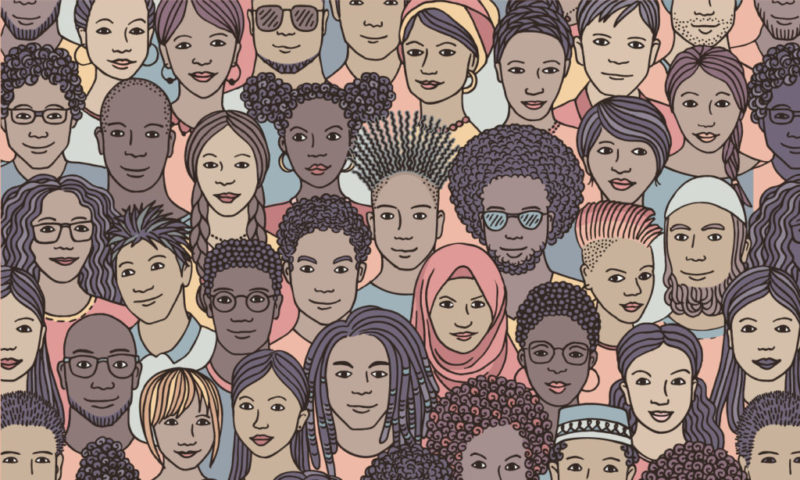
Hint: There is no right answer, because people are not a monolith.
By N. Jamiyla Chisholm, yesmagazine.com
Language is alive, and like any living thing, it changes with time. Enter the debate around the phrase “people of color” or POC, which some have begun to argue against.
To better understand how people relate to POC versus BIPOC, NPR’s “Code Switch” podcast shared listeners’ thoughts on the show and online Wednesday (Sept. 30) in the episode, “Is It Time To Say R.I.P. To ‘P.O.C.’?”
To begin with, the language that Black people have used to self-identify over the decades has changed. For example, Malcolm X started using “Afro-American” interchangeably with Black. And now there’s the more recent introduction of BIPOC (Black, Indigenous, People of Color). Last year, activist Seren Sensei wrote in a blog post that “Black is not synonymous with POC: all Black people are persons of color, but all persons of color are not Black. And non-Black persons of color, or NBPOC, still benefit from and can practice anti-Black racism.”
With these thoughts in mind, the “Code Switch” crew, hosts Shereen Marisol Meraji and Gene Demby, asked listeners whether it was time to retire POC for BIPOC, or best to avoid them all. See some of the highlights below:
POC = us:
“I like POC because it evokes an image of us, unlike the terms non-White or minority, where whiteness is front and center.” — Javier Pineda, age 35
Not all POC are the same:
“I’m Egyptian American. Whenever asked about my ethnicity, I would always just say ‘Egyptian American,’ sometimes Arab American. As a White Egyptian, I’ve never experienced the same oppression in the U.S. that other people of color have. …
Read the full article here
Learn more about self identity here
More Breaking News here
Comments Are Welcome
Note: We moderate submissions in order to create a space for meaningful dialogue, a space where museum visitors – adults and youth –– can exchange informed, thoughtful, and relevant comments that add value to our exhibits.
Racial slurs, personal attacks, obscenity, profanity, and SHOUTING do not meet the above standard. Such comments are posted in the exhibit Hateful Speech. Commercial promotions, impersonations, and incoherent comments likewise fail to meet our goals, so will not be posted. Submissions longer than 120 words will be shortened.
See our full Comments Policy here.